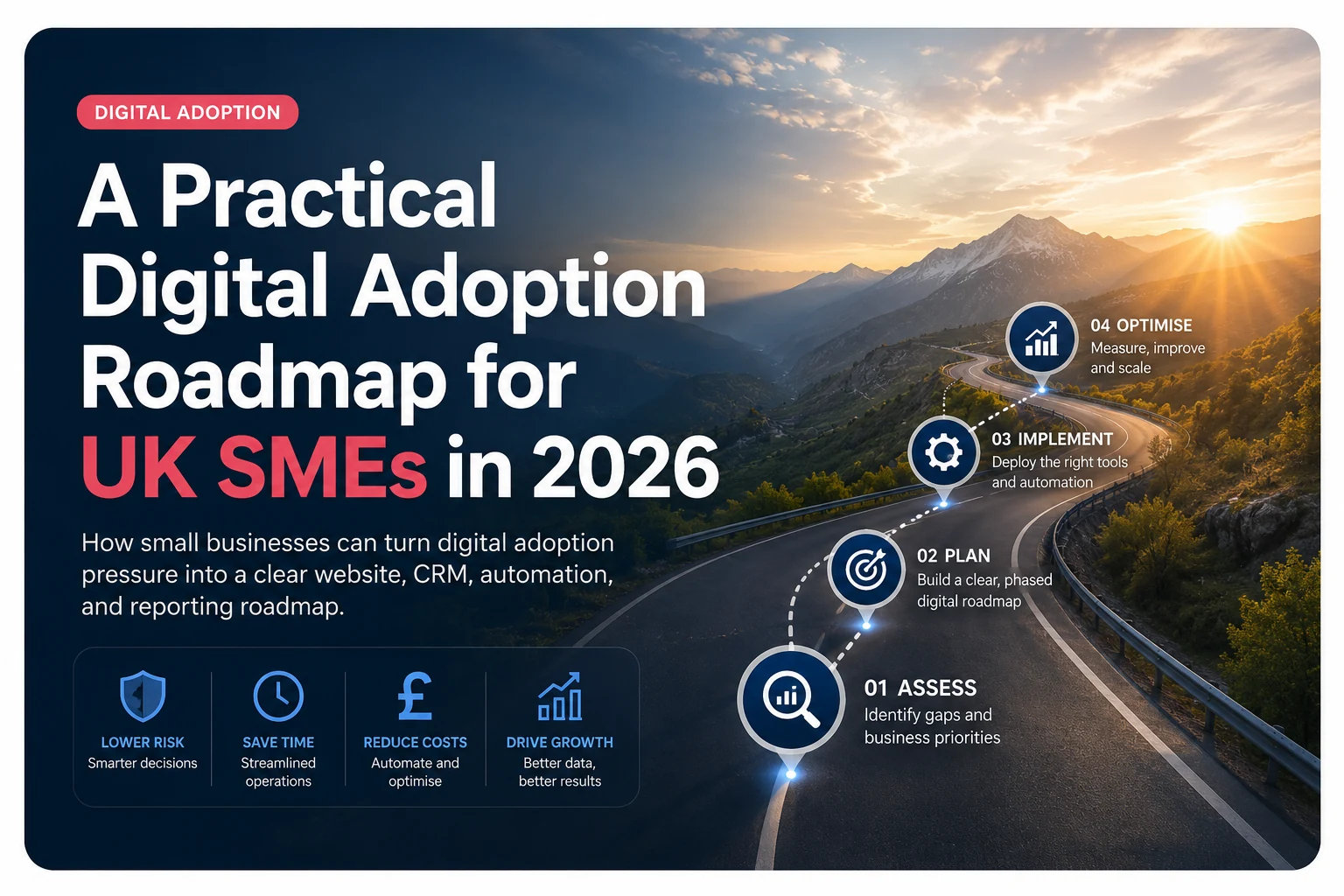
AI is becoming part of everyday business conversations, but readiness is uneven. UK government AI adoption research shows adoption is still modest across UK businesses, and that many firms face barriers around skills, cost, trust, data security, and unclear use cases.
For small businesses, the lesson is simple: AI works better when the operating basics are already clean. Poor data, scattered enquiries, unclear CRM stages, missing analytics, and inconsistent follow-up make AI harder to apply safely.
Prepare the data layer first
Before adding AI assistants or automated workflows, check whether your forms capture the right fields, your CRM records are usable, your website analytics are meaningful, and your team knows which enquiries need priority.
Choose low-risk AI use cases
Useful starting points include summarising enquiry details, drafting follow-up emails, grouping CRM records, generating first-draft content briefs, and spotting repeated support questions. These tasks keep humans in control while reducing admin effort.
Keep human review visible
AI should not silently make business decisions. Small teams should decide where review is required, who owns the output, and what data should never be sent into third-party tools.
The best AI roadmap for a UK SME is usually an operations roadmap first: clean systems, clear ownership, useful reporting, and then targeted automation.