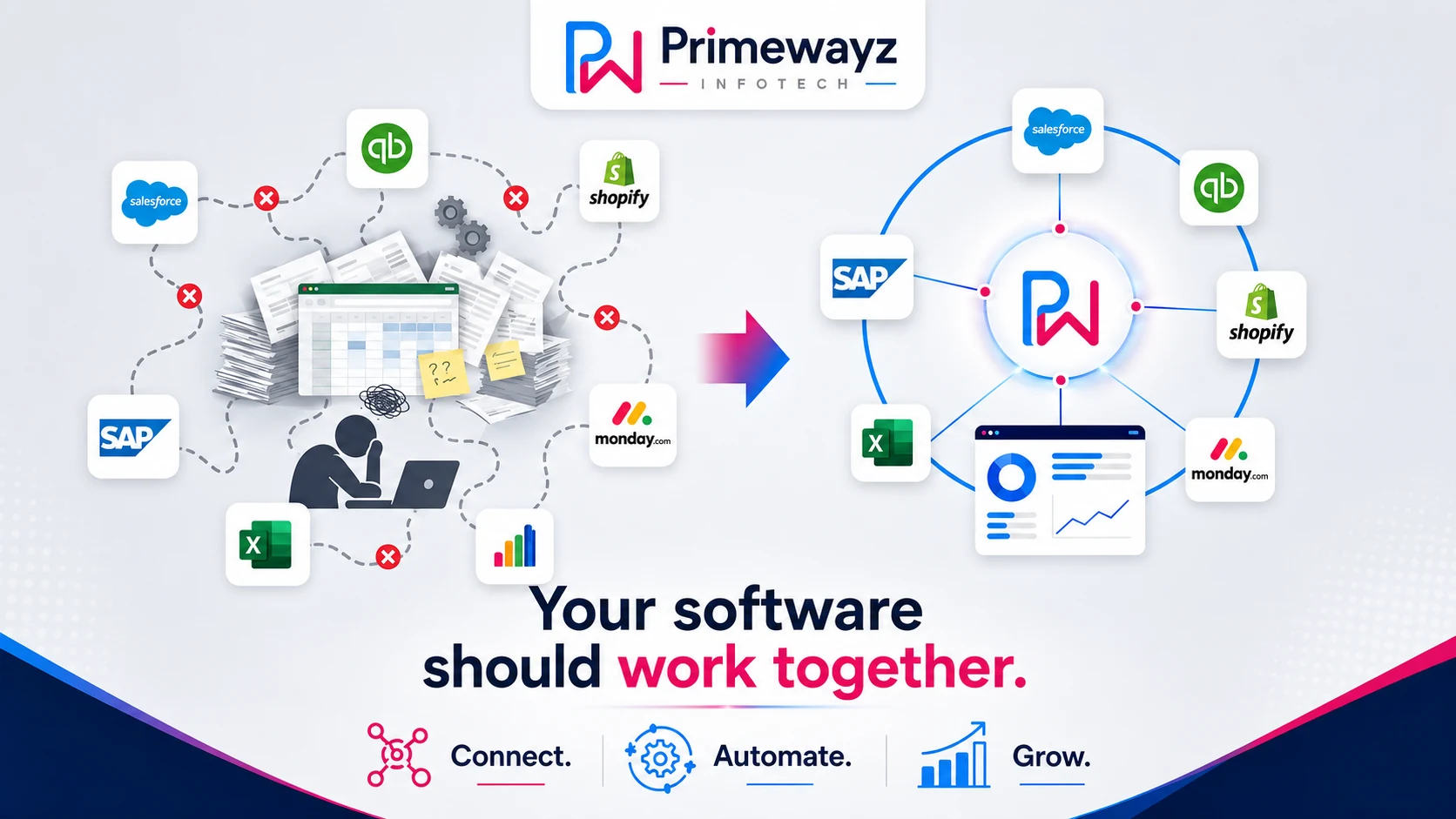
Many UK business owners and startup founders choose a development model too early.
Fixed price sounds safe. Time & Material sounds flexible. Subscription support sounds like an extra monthly cost.
But the wrong model can quietly create bigger problems later: a website goes live but nobody improves it; a SaaS MVP launches but user feedback is not acted on; a CRM workflow is built but not maintained; SEO is added once but visibility does not grow; analytics are installed but nobody reviews what is happening.
A digital product is not finished just because it is delivered. For UK SMEs, SaaS founders, fintech startups, and service-led businesses, the real value often comes after launch — when the system is improved, measured, refined, and trusted over time.
At Primewayz UK, we believe businesses should not treat websites, SaaS products, automation systems, and digital visibility as one-time assets. They need a practical model that supports continuous improvement without forcing every small change into a new project discussion.
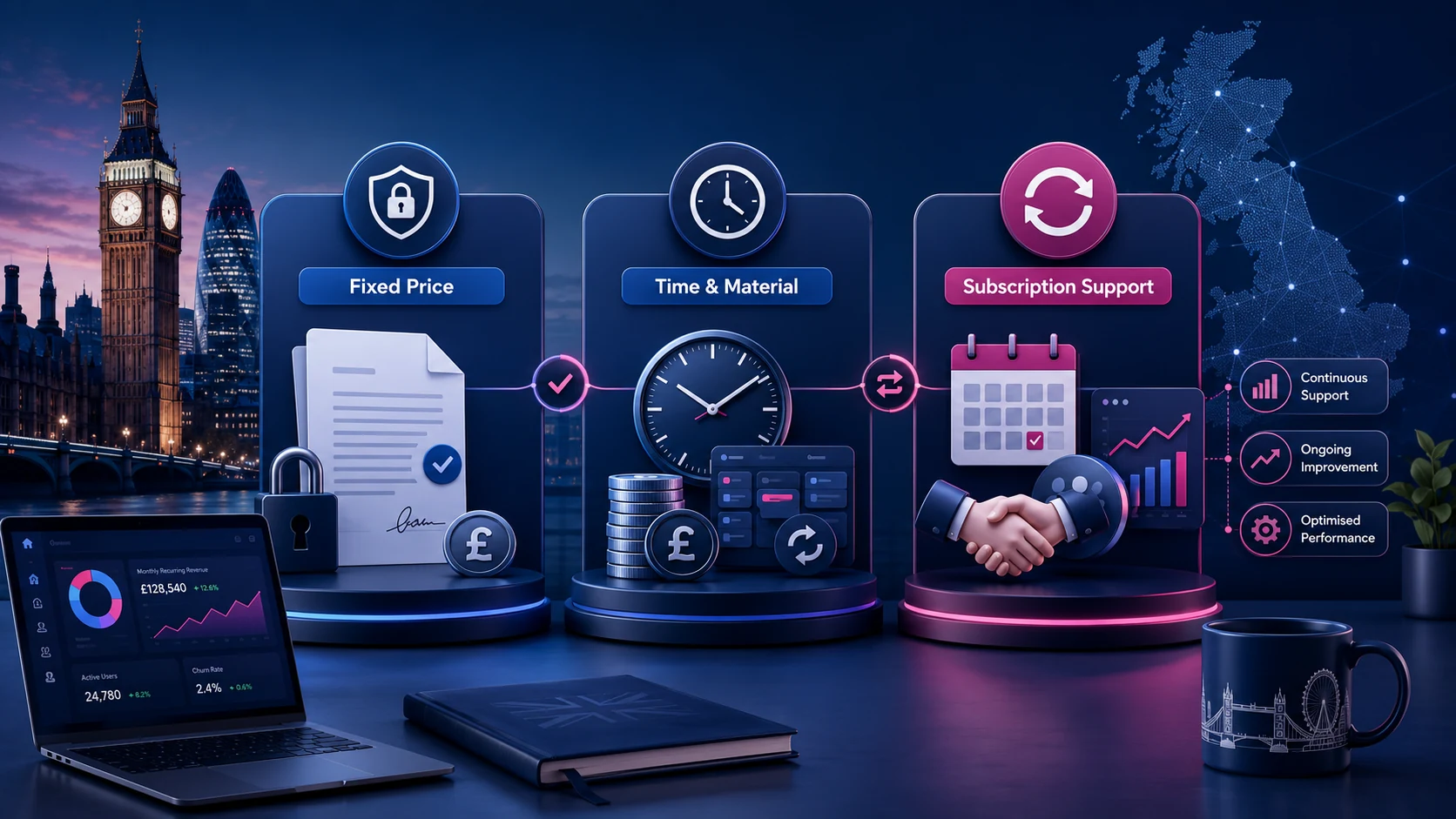
Quick answer: which model is best?
For a clearly defined one-time project, fixed price can work well. For evolving product development, Time & Material gives more flexibility. For UK SMEs and SaaS founders who need ongoing website improvements, SEO, analytics, automation, trust signals, and technical support, a subscription-based support model is often the most practical and trustworthy option.
The strongest approach is usually: Fixed foundation → Subscription support → Flexible development when needed.
What is a fixed price model?
In a fixed price model, the scope, cost, and timeline are agreed before the work begins. The client defines what needs to be built, the vendor estimates the cost, and the work is delivered against milestones. Changes usually require a separate approval or change request.
Fixed price works best for
- A small business website
- A campaign landing page
- A defined MVP
- A one-time website redesign
- A technical SEO fix list
- A specific API integration
- A limited-scope design or development task
Main benefit
The biggest advantage is cost certainty. You know what you are expected to pay before the work starts — helpful when you have a fixed budget or need approval from investors, directors, or stakeholders.
Main risk
The biggest risk is rigidity. If your business needs change, every new improvement may become out of scope. That can slow progress, create friction, and make the relationship feel transactional. Fixed price can be good for delivery, but not always for discovery, iteration, or long-term growth.
What is a Time & Material model?
In a Time & Material model, the client pays for the actual time and resources used. Scope can evolve as work progresses based on business needs, technical findings, or customer feedback.
Time & Material works best for
- SaaS product development
- Complex integrations
- AI or automation projects
- CRM customisation
- Ongoing feature development
- Marketplace platforms
- User-feedback-driven products
- Internal business systems
Main benefit and main risk
Flexibility is the advantage. Cost uncertainty is the risk — unless you have weekly progress updates, transparent time logs, monthly budget limits, clear backlog priorities, and approval for major scope changes.
What is a subscription-based digital support model?
A subscription-based model treats digital growth as an ongoing responsibility rather than a one-time project. You pay a fixed monthly amount for agreed support, improvements, monitoring, updates, and small enhancements.
This is not only about development — it is about continuity. At Primewayz UK, this is central to how we think about ongoing digital support, website improvement, technical care, SEO readiness, and business automation.
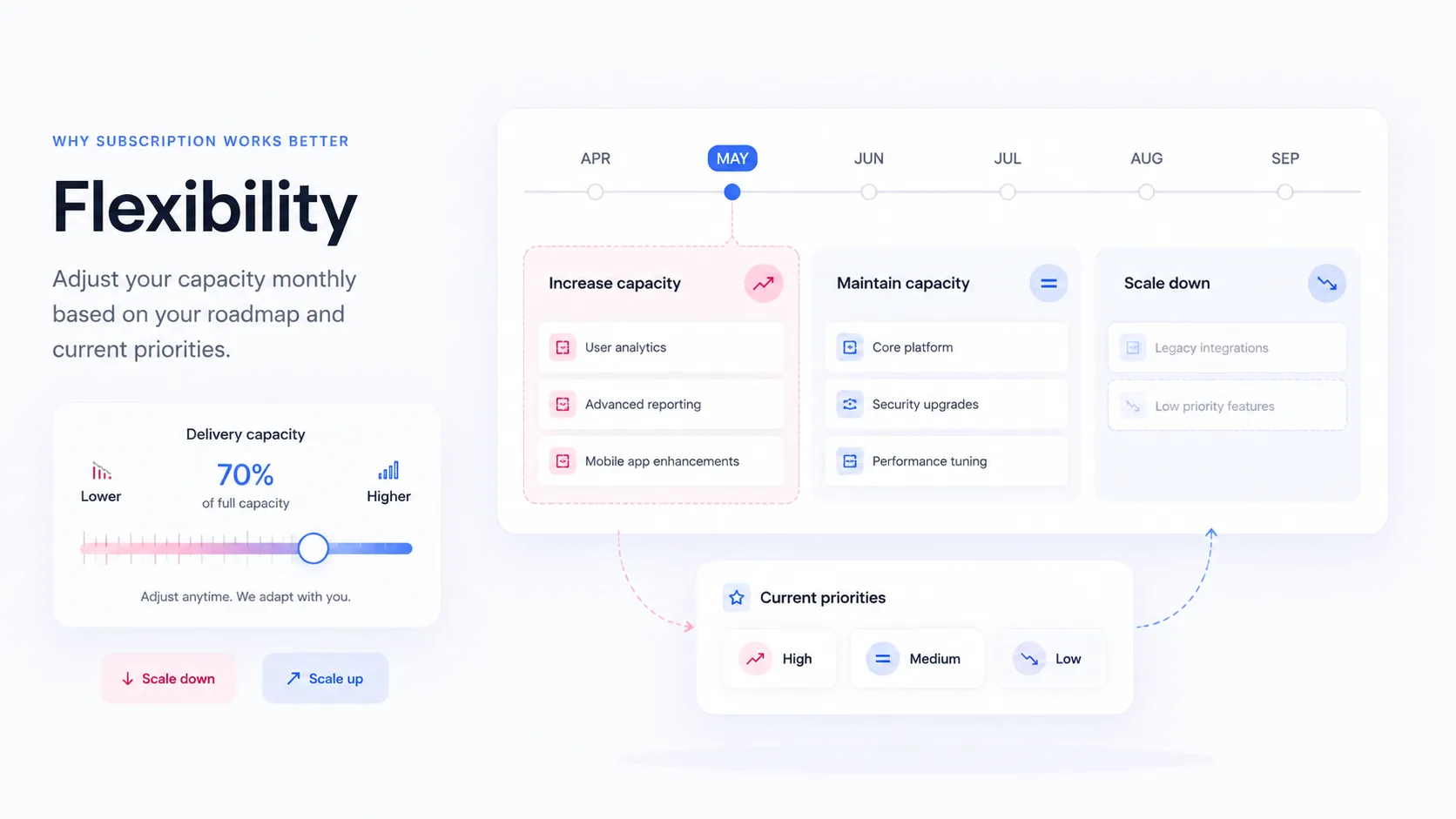
Image cue: Replace with a monthly support rhythm visual — planning, delivery, review, and improvement loop.
Subscription support works best for
- UK SMEs that need regular website updates
- SaaS founders building gradually
- Service businesses improving enquiry flow
- Companies investing in SEO and visibility
- Businesses needing monthly technical support
- Teams with CRM or automation workflows
- Founders who need landing pages and campaign support
- Businesses that want digital trust signals improved over time
Fixed price vs Time & Material vs subscription support
When fixed price makes sense
Fixed price is still the right choice when you know exactly what you want and do not expect major changes during the project — for example a simple five-page website, a campaign landing page, or a one-time audit fix list.
The problem begins when the business is still discovering what it needs. Many founders want cost certainty before they have product clarity, which often creates tension when real requirements appear after the first version is used.
When Time & Material works better
Time & Material is better when the product or system is still moving — common in SaaS, fintech, marketplaces, AI tools, CRM systems, and automation projects. However, it must be controlled with time logs, budget caps, sprint planning, and progress reports.
Why subscription support is often better for UK SMEs
Many UK SMEs do not need a full-time developer, designer, SEO manager, automation specialist, and analytics person — but they still need all of those capabilities from time to time.
- Improve website pages and service content
- Fix technical issues and create landing pages
- Review analytics and improve enquiry forms
- Add trust signals and check SEO basics
- Maintain automation workflows and support CRM improvements
With subscription support, the business does not need to start a new project every time something needs attention. There is already context, trust, and momentum.
Why subscription can be more trustworthy
A one-time project can become transactional: the vendor delivers, the client pays, the relationship ends. Digital growth does not work like that. With a subscription model, the provider has to keep proving value every month — continuity, accountability, and improvement.
The smarter hybrid model for UK businesses

Image cue: Replace with a three-phase diagram: fixed foundation, monthly subscription support, flexible development capacity.
Phase 1: fixed price foundation
Use fixed price to build the core foundation — website launch, MVP build, landing page setup, initial SEO fixes, basic CRM setup, core automation workflow, and analytics setup.
Phase 2: subscription support
Use monthly subscription support to keep improving website pages, SEO, landing pages, trust signals, analytics, conversion flow, CRM refinements, and technical maintenance. You can start with a web presence audit to identify what needs to improve first.
Phase 3: flexible development
Use Time & Material or a dedicated resource model when larger product work is required — new SaaS modules, advanced integrations, dashboards, API development, or workflow systems. For larger delivery needs, explore remote IT resource support when you need flexible technical capacity without building a full in-house team immediately.
Example: a UK SaaS founder after launch
Imagine a UK fintech founder building a financial wellbeing platform. A fixed price model may work for the first version: homepage, product explainer, beta signup form, basic dashboard, admin panel, and analytics setup.
After launch, users ask for clearer onboarding, stronger conversion tracking, SEO pages, trust signal improvements, better LinkedIn landing pages, improved CRM routing, and content based on customer questions. Opening a new fixed-price project every two weeks becomes inefficient. A subscription model becomes more practical — continuous improvement without hiring a full internal team.

Image cue: Replace with a founder workshop or product review scene showing post-launch iteration priorities.
What should be included in a good subscription support model?
- Monthly improvement plan and defined response time
- Priority support channel and website update allowance
- Technical maintenance, SEO and visibility checks
- Analytics review and conversion improvement suggestions
- Landing page or content support and CRM/enquiry flow support
- Transparent task tracking and monthly summary of completed work
Common mistakes when choosing a model
- Treating launch as the finish line — launch is the beginning of learning.
- Choosing fixed price for an unclear product — scope disputes follow.
- Using Time & Material without control — structure is essential.
- Ignoring post-launch improvement — many systems fail because they are not refined after go-live.
- Seeing subscription as only a cost — good subscription support keeps digital systems alive and aligned with the business.
Frequently asked questions
Is fixed price cheaper than subscription support?
Fixed price may look cheaper at the beginning because it covers a defined delivery. But if your website, product, or system needs regular improvements, repeated fixed-price changes can become slower and more expensive over time. Subscription support is usually better when you need continuous improvement rather than one-time delivery.
Is Time & Material more flexible than subscription support?
Yes, Time & Material is usually more flexible for active development. Subscription support is often better for ongoing website improvements, SEO updates, analytics review, conversion fixes, small changes, and technical care.
Is subscription support suitable for startups?
Yes. Subscription support can be very useful for startups that need consistent progress but cannot yet afford a full internal team — especially SaaS founders, fintech founders, and service businesses that need website updates, landing pages, analytics, CRM support, and visibility improvements.
What is the best model for a UK SME website?
For a new website, a fixed price foundation followed by monthly subscription support is often the most practical model.
What is the best model for a SaaS product?
For SaaS, a hybrid model usually works best: fixed price for a clearly scoped MVP, subscription support for ongoing visibility and product improvements, and Time & Material for larger feature development via software product delivery.
What should I check before choosing a development partner?
Check whether the partner offers clear communication, transparent pricing, defined scope, post-launch support, SEO and analytics understanding, technical maintenance, ownership of code and assets, reliable reporting, and a long-term improvement process.
Why does Primewayz UK prefer subscription-based support?
Primewayz UK prefers subscription-based support because most businesses need ongoing improvement after launch. A website, SaaS product, CRM workflow, or automation system creates more value when it is continuously refined, monitored, and aligned with real business goals.
Key takeaways
- Fixed price gives cost certainty, but it can become rigid.
- Time & Material gives flexibility, but it needs strong budget control.
- Subscription support gives continuity, trust, and steady improvement.
- The best model for many UK SMEs and SaaS founders is: fixed foundation → monthly subscription support → flexible development when needed.
Primewayz UK perspective
At Primewayz UK, we believe digital systems should not be treated as one-time assets. A website, SaaS product, CRM, automation workflow, or SEO foundation needs continuous attention to create real business value.
Our subscription-based model is designed for UK SMEs, founders, and service-led businesses that want reliable monthly improvement without hiring a full internal team. We help with website improvements, SEO and digital visibility, landing pages, trust signals, analytics, CRM and enquiry flow, automation support, SaaS enhancements, and monthly technical care.
You can start by running a quick web presence audit to understand how your current website, visibility, trust signals, and enquiry flow can be improved — or book a UK discovery call to discuss the right model for your business.
Build quietly. Improve consistently. Help customers feel the difference.